
 By Mr.Sun
Investment casting is a precision manufacturing process used to produce complex metal parts with high accuracy and smooth surface finish.

The method is also commonly called lost wax casting because the wax pattern used in the process is melted away before metal is poured into the mold.
This casting technique has been used for thousands of years. Ancient civilizations used it to create jewelry, sculptures, and tools.
Today, modern industries such as aerospace, automotive, medical equipment, machinery, and industrial manufacturing widely use investment casting to produce high-precision components.
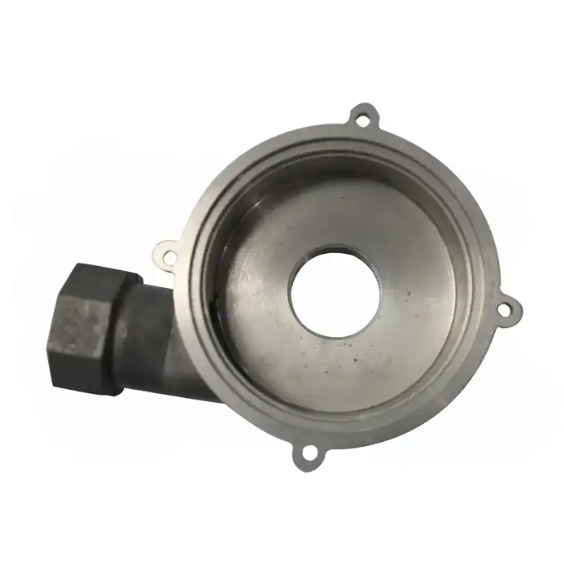
The main advantage of investment casting is that it can produce parts with complex shapes, thin walls, tight tolerances, and excellent surface quality without requiring extensive machining.
What Do You Mean by Investment Casting?
Investment casting means creating a metal component by first producing a wax pattern, coating it with ceramic material to form a mold, removing the wax, and then pouring molten metal into the mold cavity.
Because the wax pattern is destroyed during the process, each mold is used only once. However, this allows manufacturers to produce extremely complex and detailed parts that would be difficult or impossible to create using other casting methods.
The process is commonly used to manufacture components such as:
-
Pump impellers
-
Valve bodies
-
Turbine blades
-
Automotive parts
-
Stainless steel fittings
-
Machinery components
Many manufacturers, suppliers, exporters, and factories in China specialize in investment casting because the process offers high precision and competitive production cost.
Basic Investment Casting Process
The investment casting process usually includes the following steps:
-
Wax Pattern Creation
A wax replica of the final product is made using injection molding. -
Assembly of Wax Patterns
Multiple wax patterns are attached to a central wax runner to form a tree-like structure. -
Ceramic Shell Building
The wax assembly is repeatedly dipped into ceramic slurry and coated with sand to build a strong shell. -
Wax Removal (Dewaxing)
The ceramic mold is heated to melt and remove the wax. -
Metal Pouring
Molten metal is poured into the hollow ceramic mold. -
Cooling and Solidification
The metal cools and takes the exact shape of the mold. -
Shell Removal and Finishing
The ceramic shell is broken away and the cast parts are cut from the tree and finished.
Comparison of Investment Casting with Other Casting Methods
| Casting Method | Precision | Surface Finish | Complexity | Material Options | Typical Applications |
|---|---|---|---|---|---|
| Investment Casting | Very High | Excellent | Very Complex | Stainless steel, carbon steel, alloys | Aerospace, pumps, valves |
| Sand Casting | Medium | Rough | Simple to Moderate | Iron, steel, aluminum | Large industrial parts |
| Die Casting | High | Smooth | Moderate | Aluminum, zinc | Automotive and electronics |
| Gravity Casting | Medium | Moderate | Simple | Aluminum alloys | Machinery parts |
| Forging | Very High Strength | Good | Limited shapes | Steel alloys | High-strength components |
From the table above, investment casting is particularly suitable for high-precision and complex metal components.
Advantages of Investment Casting
Some of the main advantages include:
-
Excellent dimensional accuracy
-
Smooth surface finish
-
Ability to produce complex geometries
-
Reduced machining requirements
-
Suitable for many metal alloys
-
Efficient for medium to large production runs
Because of these advantages, many industries rely on investment casting manufacturers and suppliers to produce critical components.
Frequently Asked Questions (FAQ)
1. What materials can be used in investment casting?
Investment casting supports a wide range of materials including stainless steel, carbon steel, alloy steel, aluminum, brass, and bronze. The method is especially popular for stainless steel parts because it provides excellent precision and corrosion resistance.
2. Why is investment casting also called lost wax casting?
The process is called lost wax casting because the wax pattern used to create the mold is melted and removed during the process. Once the wax is removed, molten metal is poured into the empty cavity to form the final part.
3. What industries use investment casting?
Many industries use investment casting, including aerospace, automotive, medical equipment, industrial machinery, oil and gas, and pump and valve manufacturing. It is widely used when precision and complex design are required.
4. What are the advantages of investment casting compared to sand casting?
Investment casting offers higher precision, better surface finish, and the ability to create complex shapes. Sand casting is usually used for larger and simpler components where precision requirements are lower.
5. Is investment casting expensive?
The initial tooling cost can be higher than some other casting methods. However, the overall production cost can be lower because investment casting reduces machining, material waste, and finishing operations.
6. Why do many companies choose China investment casting factories?
Many companies work with China investment casting manufacturers and exporters because they offer competitive prices, advanced manufacturing technology, skilled labor, and large production capacity.
Get Best China Investment Castings
Join the TripleAce Castings newsletter to receive updates about investment casting, lost wax casting, and custom steel casting solutions.


