
 By Mr.Sun
Choosing the wrong casting process can lead to expensive tooling mistakes, production delays, excessive machining costs, and even part failures.
Many buyers focus only on the initial mold cost, but the real manufacturing cost includes machining, finishing, labor, tolerances, and long-term production efficiency.
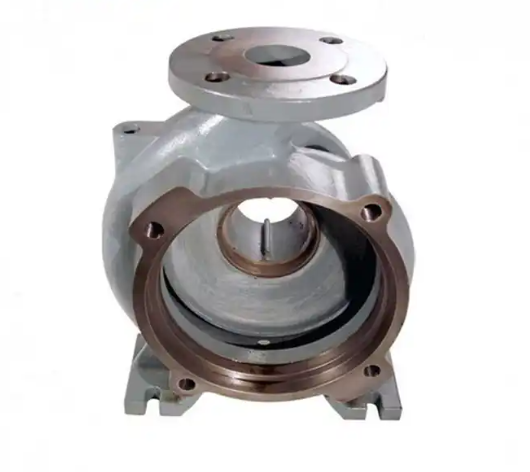
At TripleAce Casting, we manufacture high-quality precision metal castings for global industries including automotive, pump and valve, mining, agriculture, marine, machinery, and industrial equipment.
Understanding the difference between investment casting and sand casting is critical for selecting the right process for your project.
This guide explains the core differences, advantages, disadvantages, costs, tolerances, surface finishes, and production strategies behind both casting methods.

Key Takeaways
- Investment casting provides excellent precision, smooth surface finish, and complex geometry capability.
- Sand casting is ideal for large parts, lower production volumes, and projects with less strict tolerances.
- Investment casting has higher tooling costs but lower machining costs.
- Sand casting has lower tooling costs but often requires more secondary machining.
- Total manufacturing cost matters more than initial mold cost.
- Production volume strongly affects which casting method is more economical.
The Core Difference: Precision vs. Volume
The simplest way to understand investment casting versus sand casting is this:
Investment Casting
Investment casting, also called lost wax casting, focuses on:
- High dimensional accuracy
- Smooth surface finish
- Complex geometries
- Thin walls
- Reduced machining
- Near-net-shape production
It is commonly used for:
- Stainless steel parts
- Aerospace components
- Valve parts
- Pump impellers
- Precision machinery
- Automotive components
Sand Casting
Sand casting is better suited for:
- Large metal parts
- Heavy castings
- Low-volume production
- Simpler geometries
- Lower tooling investment
It is widely used for:
- Engine blocks
- Heavy machinery
- Construction equipment
- Large housings
- Agricultural machinery
Quick Comparison Table
| Feature | Investment Casting | Sand Casting |
|---|---|---|
| Tooling Cost | Higher | Lower |
| Machining Requirement | Lower | Higher |
| Surface Finish | Smooth | Rough |
| Precision | High | Moderate |
| Production Volume | Medium to High | Low to Medium |
| Typical Part Size | Small to Medium | Medium to Very Large |
| Design Complexity | Excellent | Limited |
| Thin Wall Capability | Excellent | Limited |
| Lead Time | Longer Tooling Time | Faster Startup |
How Investment Casting Works
Investment casting uses a ceramic shell process to create high-precision metal components.
The process includes:
- Wax pattern injection
- Wax assembly tree creation
- Ceramic slurry coating
- Shell drying
- Wax removal
- Molten metal pouring
- Shell breaking
- Cutting and finishing
- Machining and inspection
Because the ceramic shell reproduces the smooth wax pattern very accurately, investment casting produces excellent surface quality and tight tolerances.
At TripleAce Casting, advanced silica sol investment casting technology is used to manufacture precision stainless steel castings with outstanding dimensional accuracy.
How Sand Casting Works
Sand casting uses compacted sand molds to create metal parts.
The process includes:
- Pattern creation
- Sand mold preparation
- Mold assembly
- Molten metal pouring
- Cooling
- Sand removal
- Cleaning and finishing
The texture of the sand transfers directly onto the casting surface, creating a rougher finish compared with investment casting.
Sand casting is highly effective for large industrial parts where surface appearance and ultra-tight tolerances are not critical.
Surface Finish and Appearance
Surface finish is one of the biggest differences between the two casting methods.
Investment Casting Surface Finish
Investment casting typically produces:
- Smooth surface finish
- Fine detail reproduction
- Minimal grinding
- Better cosmetic appearance
Typical roughness:
- Ra 63–125
This often allows parts to move directly into assembly or coating processes without extensive polishing.
Sand Casting Surface Finish
Sand casting usually produces:
- Rough surface texture
- Grainy appearance
- Visible parting lines
- More grinding and polishing requirements
Typical roughness:
- Ra 250–500
For decorative or exposed products, additional finishing costs may be required.
Dimensional Tolerances and Precision
Investment Casting Precision
Investment casting is considered a near-net-shape process.
Advantages include:
- Tight tolerances
- Excellent repeatability
- Reduced machining
- Better dimensional consistency
Typical tolerances:
- ±0.005 inch to ±0.015 inch
This reduces CNC machining time and material waste.
Sand Casting Precision
Sand casting generally requires:
- Wider tolerances
- Larger machining allowances
- Additional finishing operations
Typical tolerances:
- ±0.030 inch or greater
The sand mold can shift during pouring and cooling, affecting dimensional stability.
Tooling Cost vs Unit Price
Investment Casting Tooling Cost
Investment casting tooling is usually more expensive because precision metal dies are required.
Typical tooling costs:
- $6,000 to $15,000 or more
However, the unit cost decreases significantly in mass production because:
- Machining is reduced
- Surface finishing is reduced
- Production efficiency increases
Sand Casting Tooling Cost
Sand casting patterns are cheaper and faster to produce.
Typical tooling costs:
- Around $2,000 or lower
This makes sand casting attractive for prototypes and low-volume production.
However, ongoing machining and labor costs may increase total production expenses over time.
Production Volume and Scalability
Sand Casting for Low Volume
Sand casting is ideal for:
- Prototype production
- Small batch manufacturing
- Large replacement parts
- Fast startup projects
A wood or resin pattern can be produced quickly, allowing fast production startup.
Investment Casting for Mass Production
Investment casting scales efficiently for:
- Medium-volume production
- High-volume production
- Precision manufacturing
Multiple wax patterns can be assembled onto one tree, allowing dozens or hundreds of parts to be cast simultaneously.
At TripleAce Casting, automated shell-building systems and precision machining workshops help reduce production costs for large-volume OEM casting projects.
Material Versatility and Design Freedom
Both casting methods support many metal alloys, including:
- Stainless steel
- Carbon steel
- Alloy steel
- Aluminum
- Bronze
- Cast iron
However, investment casting provides much greater design flexibility.
Investment Casting Advantages
Investment casting can easily produce:
- Thin walls
- Complex undercuts
- Intricate internal passages
- Fine details
- Complex geometries
Because the ceramic shell is broken away after casting, there are fewer design limitations.
Sand Casting Limitations
Sand casting requires draft angles so the pattern can be removed from the mold.
This limits:
- Thin-wall structures
- Sharp corners
- Undercuts
- Complex internal features
Hidden Costs of Choosing the Wrong Casting Process
The biggest mistake is focusing only on initial tooling cost instead of total cost of ownership.
For example:
- A cheaper sand casting may require expensive CNC machining later.
- A precision investment casting may eliminate multiple machining operations.
- Incorrect process selection may increase scrap rates and delays.
At TripleAce Casting, engineering teams review CAD files before tooling production begins to optimize casting design, reduce porosity risk, improve manufacturability, and lower total production cost.
When to Choose Sand Casting
Choose sand casting if:
- Production quantity is low
- Parts are extremely large
- Surface finish is not critical
- Tolerances are moderate
- Fast prototypes are required
- Tooling budget is limited
When to Choose Investment Casting
Choose investment casting if:
- High precision is required
- Surface finish is important
- Machining cost must be minimized
- Complex geometry is needed
- Thin walls are required
- Large production volume is planned
Why Choose TripleAce Casting
TripleAce Casting specializes in:
- Precision investment casting
- Stainless steel casting
- Carbon steel casting
- Silica sol casting
- Water glass casting
- CNC machining
- OEM custom casting services
TripleAce Casting provides:
- Competitive pricing
- Stable product quality
- Fast quotations
- Engineering support
- Global export service
- Advanced foundry technology
Whether your project requires complex precision castings or large industrial components, TripleAce Casting can help optimize your production strategy and reduce total manufacturing cost.
Conclusion
There is no single “best” casting method. The right choice depends on your:
- Budget
- Production quantity
- Surface finish requirements
- Tolerance requirements
- Design complexity
- Delivery schedule
Investment casting delivers superior precision, aesthetics, and reduced machining, while sand casting offers lower tooling cost and excellent capability for large heavy parts.
Working with an experienced foundry partner like TripleAce Casting helps ensure you select the right manufacturing process for long-term production success.

Get Best China Investment Castings
Join the TripleAce Castings newsletter to receive updates about investment casting, lost wax casting, and custom steel casting solutions.


