
 By Mr.Sun
In manufacturing terminology, the word investment refers to the act of covering or surrounding an object with a protective layer.
In the investment casting process, a wax model is coated with a ceramic material that forms a strong mold.
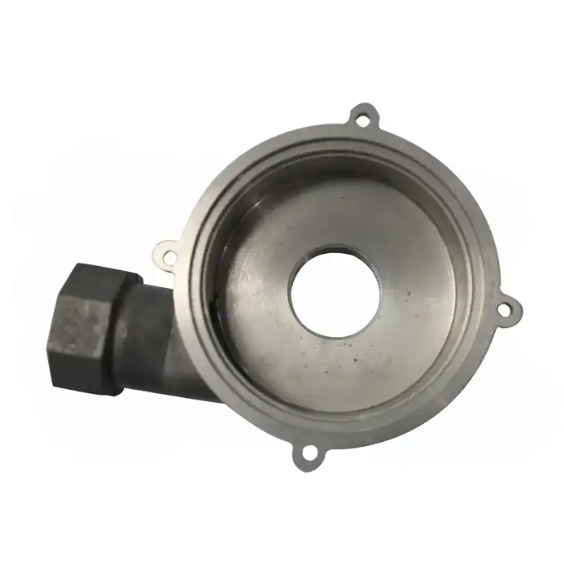
After the coating hardens, the wax is melted and removed, leaving behind a hollow cavity that precisely matches the original wax pattern.
Molten metal is then poured into this cavity and allowed to cool, producing a metal part that replicates the fine details of the wax model.
Investment casting, also known as lost wax casting, is one of the oldest metal-forming techniques in human history.
The method dates back to the Bronze Age when early craftsmen used wax patterns to create intricate metal objects. Today, the technology has evolved significantly and is widely used in modern manufacturing industries.
Companies such as TripleAce Castings, a professional investment casting manufacturer, use advanced CNC tooling, modern ceramic shell processes, and high-quality alloy materials to produce precision metal components for industries around the world.
Investment casting is especially valuable for manufacturing complex parts that would otherwise be difficult or impossible to produce using conventional machining or other casting processes.
What Is Investment Casting?
Investment casting is a precision metal casting process used to produce complex parts with high dimensional accuracy and smooth surface finishes.

The method is ideal for manufacturing components that require intricate geometries, thin walls, tight tolerances, and excellent material properties.
Because of its precision and design flexibility, investment casting is commonly used in industries such as:
-
Aerospace
-
Automotive
-
Energy and power generation
-
Medical equipment
-
Industrial machinery
-
Marine engineering
-
Jewelry manufacturing
Manufacturers like TripleAce Castings specialize in producing custom investment cast components for global customers, providing high-quality castings that meet strict engineering and performance standards.
Why Is Investment Casting Also Called the Lost Wax Process?
The name lost wax casting describes the key step in the process.
A wax pattern of the desired component is first created. This wax model is then coated with a refractory ceramic material that forms the mold shell. After the ceramic layer dries and hardens, the mold is heated in a furnace.
During this heating process:
-
The ceramic shell becomes strong and heat resistant.
-
The wax pattern melts and flows out of the mold.
Because the wax disappears during this stage, it is described as “lost wax.”

What remains is a hollow mold cavity that perfectly matches the original pattern. Molten metal is then poured into the cavity to create the final casting.
How Investment Casting Differs From Other Casting Methods
All casting processes involve pouring molten metal into a mold cavity. The primary difference between casting methods lies in how the mold cavity is created.
| Casting Method | Mold Material | Precision Level | Typical Applications |
|---|---|---|---|
| Investment Casting | Ceramic shell formed around wax pattern | Very high precision | Turbine blades, valves, medical parts |
| Die Casting | Hardened steel mold | High precision for mass production | Automotive components, electronics |
| Sand Casting | Sand mold formed around pattern | Moderate precision | Large machinery parts |
| Permanent Mold Casting | Reusable metal mold | Moderate to high | Aluminum components |
Investment casting offers a unique balance between precision, design flexibility, and cost, especially for complex parts with detailed features.
Primary Purpose of Investment Casting
The main purpose of investment casting is to manufacture complex and high-precision metal components with excellent dimensional accuracy and surface quality.
This method is particularly useful when parts:
-
Have complex internal cavities or thin walls
-
Require tight tolerances
-
Need excellent surface finish
-
Are difficult to produce using traditional machining or forging
Investment casting allows engineers to create designs that would otherwise require multiple machining steps or assembly of several components.
Industries That Use Investment Casting
Investment casting is widely used in industries that demand precision engineering and reliable performance.
Aerospace Industry
The aerospace sector uses investment casting to manufacture turbine blades, fuel system components, and structural parts that must withstand high temperatures and mechanical stress.
Automotive Industry
Automotive manufacturers use the process for engine components, turbocharger parts, and suspension systems.
Medical Industry
Medical equipment manufacturers rely on investment casting to produce surgical instruments, orthopedic implants, MRI machine components, and hospital equipment parts.
Industrial Machinery
Many industrial machines require precision cast components such as pump impellers, valve bodies, and gear housings.
Companies like TripleAce Castings supply investment cast parts for these industries worldwide.
Step-by-Step Investment Casting Process
The investment casting process involves several carefully controlled steps.
1. Wax Pattern Creation
A wax model of the desired part is created either by wax injection molds, hand carving, or 3D printing.
2. Pattern Assembly
Multiple wax patterns are attached to a central wax sprue to form a casting tree.
3. Ceramic Shell Formation
The wax assembly is repeatedly dipped into ceramic slurry and coated with sand, forming a strong shell mold.
4. Wax Removal
The ceramic shell is heated in a furnace, causing the wax to melt and drain out, leaving a hollow mold cavity.
5. Metal Pouring
Molten metal is poured into the mold cavity and allowed to cool and solidify.
6. Shell Removal and Finishing
After cooling, the ceramic shell is broken away and the cast parts are separated, cleaned, and finished.
Materials Suitable for Investment Casting
Investment casting can be performed using many metals and alloys.
Carbon Steel
Carbon steel castings provide excellent strength and durability for mechanical parts.
Aluminum
Aluminum investment castings are lightweight and corrosion resistant.
Stainless Steel
Stainless steel is widely used for its corrosion resistance and strength, especially in industrial and medical applications.
Brass
Brass is commonly used for decorative and functional components due to its attractive appearance and corrosion resistance.
Glass
In rare cases, the process is also used for artistic glass casting.
Advantages of Investment Casting
Investment casting offers several major benefits:
-
Ability to produce complex shapes and thin walls
-
Excellent surface finish
-
High dimensional accuracy
-
Wide material selection
-
Reduced machining requirements
-
Low material waste
-
Ability to combine multiple parts into one casting
For these reasons, manufacturers such as TripleAce Castings rely on investment casting to produce high-quality components efficiently.
Disadvantages of Investment Casting
Despite its advantages, investment casting also has limitations:
-
Higher production cost than sand casting for simple parts
-
Multi-step process requiring skilled control
-
Size and weight limitations compared with sand casting
-
Longer production time for small batches
However, for complex and high-precision parts, the process remains extremely cost-effective.
Examples of Investment Casting Products
Typical products produced through investment casting include:
-
Gas turbine blades
-
Turbocharger components
-
Pump impellers
-
Valve bodies
-
Jewelry and decorative items
-
Dental implants
-
Orthopedic implants
-
Industrial machine components
How TripleAce Castings Supports Investment Casting Projects
TripleAce Castings provides professional investment casting services for global customers.
With advanced manufacturing equipment, strict quality control systems, and experienced engineering teams, the company produces precision metal castings for multiple industries.
By combining modern casting technology with advanced CNC machining, TripleAce Castings can deliver high-quality parts with excellent dimensional accuracy, competitive pricing, and reliable delivery schedules.
Get Best China Investment Castings
Join the TripleAce Castings newsletter to receive updates about investment casting, lost wax casting, and custom steel casting solutions.


