
 By Mr.Sun
Gravity filling and high-pressure injection use different routes to a finished die-cast component.
Gravity die casting vs high-pressure die casting should begin with the material, geometry and final acceptance requirement. Both can use reusable metal tooling, but they fill it differently and create different design and production questions. A useful comparison covers mold release, internal features, finishing and qualification rather than ranking the two processes from a general claim about wall thickness or production speed.
Contents
Keep the filling distinction explicit
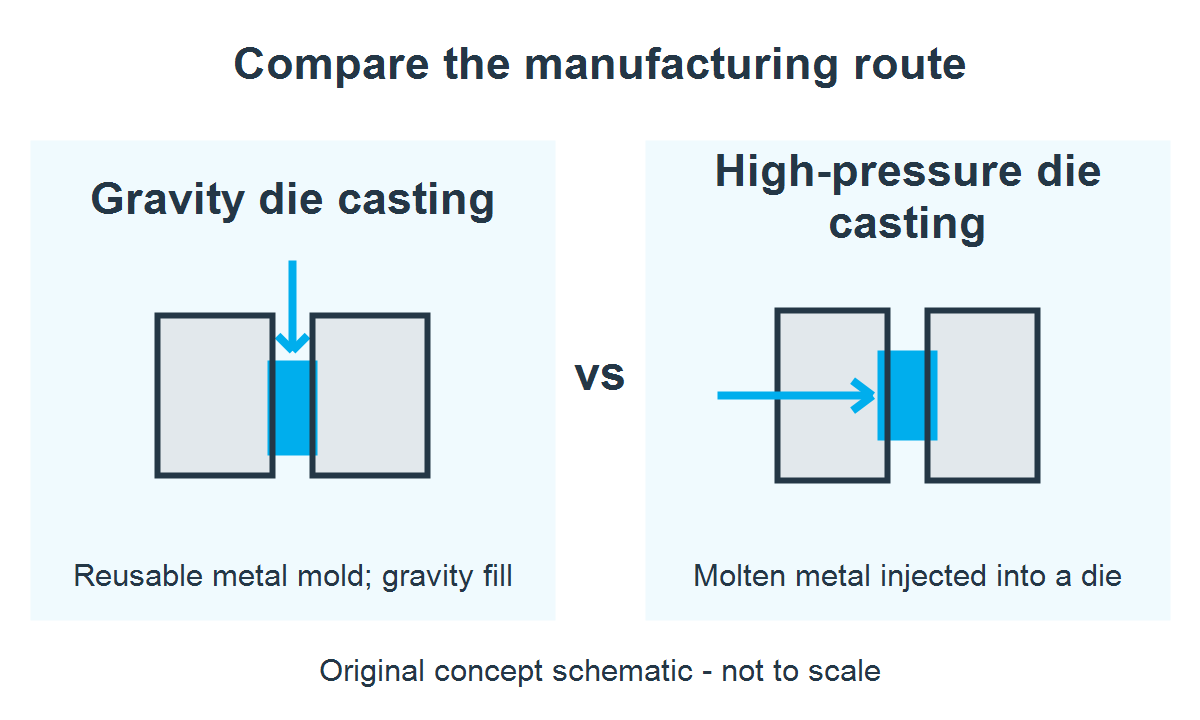
Gravity die casting relies primarily on gravity to fill the mold. High-pressure die casting injects molten metal into a reusable die under pressure. This distinction matters to the proposed tooling and process plan, but neither short description specifies all controls used by a particular supplier.
Ask the quotation to identify the actual process variant. If a proposal relies on a particular filling control or another specialized arrangement, retain that detail in the review. Do not apply a capability associated with a controlled variant to every process carrying the same broad die-casting label.
Compare the approved material and geometry
Confirm the alloy specification and required delivery condition for both proposals. Similar descriptions such as aluminum casting do not establish that the same material condition is being offered. Any proposed material change needs engineering approval independently of the process price.
For an illustrative cover with ribs and mounting bosses, review the complete section pattern, not just its minimum wall. Ask each supplier to explain parting, release and the formation of recessed regions. Identify proposed geometry changes so their effect on fit, stiffness or sealing can be reviewed explicitly.
Review internal features and downstream operations
Internal cavities and undercuts require a workable tooling or core arrangement. Ask how each feature is created and how the casting is released. A reusable outer die does not mean that every possible internal geometry is straightforward or that all secondary operations can be omitted.
Where a bore or sealing face is machined, relate it to the cast interior and the chosen datums. The final result depends on both the blank and the finishing sequence. Hold these relationships constant when comparing quotations, or document any different design concept as a separate proposal.
| Comparison point | Practical review |
|---|---|
| Filling | Identify gravity or the actual pressure-process variant |
| Geometry | Parting, release and internal-feature arrangements |
| Acceptance | Material, soundness and functional evidence |
| Program | Tooling plus all recurring finishing and inspection |
Specify quality by function and evidence
An attractive exterior is not a complete indication of internal soundness or final performance. State the relevant material, dimensional and functional requirements. If pressure retention, leakage or another characteristic matters, agree the appropriate test and acceptance basis for the finished component.
Avoid a blanket assumption that either process eliminates porosity or always permits every later treatment. Review the actual alloy and process with the supplier. Sample evidence should demonstrate the agreed requirements, with the processing route recorded so a future order does not silently adopt a different basis.
Compare the production program beyond cycle time
Tooling, preparation, trimming, machining and inspection all contribute to delivery and cost. A short forming cycle does not establish the cost of an accepted finished part. Obtain a common-scope quotation and separate initial tooling from recurring operations.
Discuss the expected order cadence, revision likelihood and tool maintenance responsibilities. If the part is still changing, quote development and stable production separately. There is no universally useful crossover quantity without the actual geometry, material, finishing scope and supplier assumptions.
Select an approved route with controlled changes
A useful approval package identifies the drawing revision, material, filling route, critical interfaces and required evidence. List any deviations and settle them before tool release. This makes the comparison repeatable and gives future purchasing decisions a clear reference.
Choose gravity or high-pressure die casting on the strength of the proposed finished-part route. The right answer explains why that route fits the component and production program, rather than presenting pressure or gravity as an automatic quality ranking.
For a component-specific discussion, review the product and manufacturing overview and use the contact page with the current drawing and required delivery condition.

Get Best China Investment Castings
Join the TripleAce Castings newsletter to receive updates about investment casting, lost wax casting, and custom steel casting solutions.


