
 By Mr.Sun
Two familiar names usually describe the same process family, so compare the actual route instead.
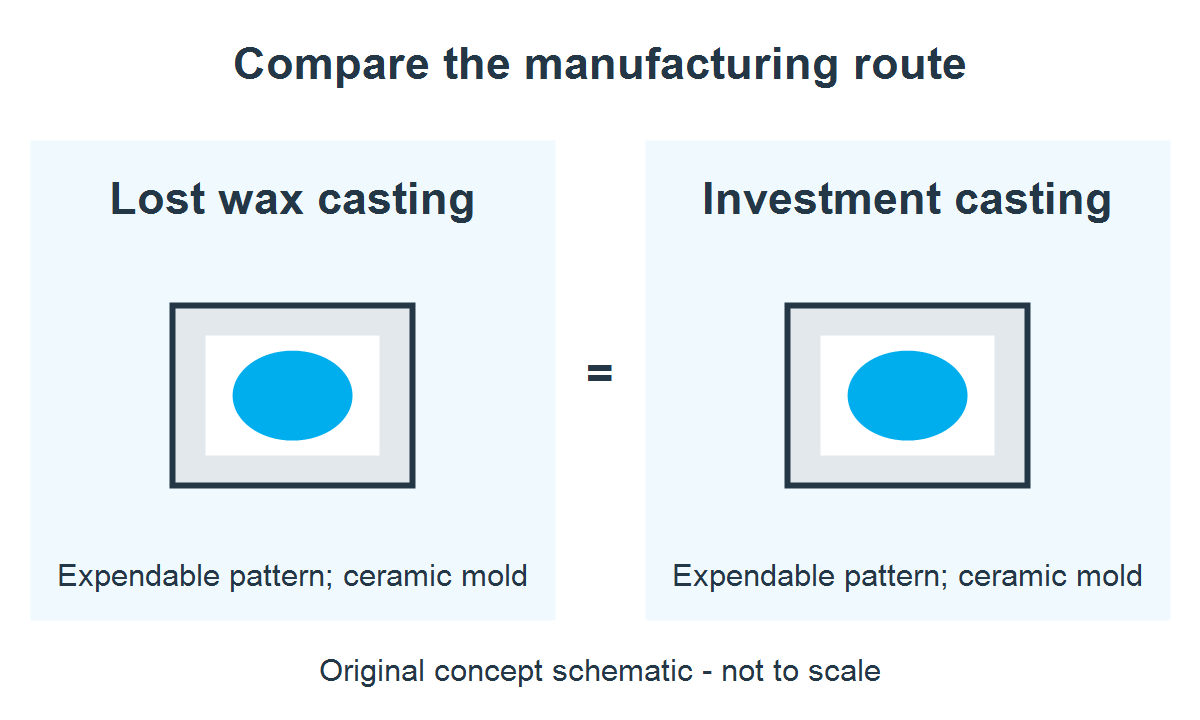
Lost wax casting vs investment casting often appears to be a choice between two manufacturing methods. In ordinary metal-casting usage, lost wax casting is a name for investment casting rather than a competing process. The useful purchasing question is therefore not which name is better, but what pattern, mold, alloy and finishing route a supplier is actually proposing for the component.
Contents
Why the two names overlap
The name lost wax emphasizes the expendable wax pattern that is removed before metal fills the mold cavity. Investment describes the refractory material surrounding the pattern. These names highlight different stages of the same basic process family; they do not establish separate quality levels.
A quotation should not claim a price or accuracy advantage merely by switching between the two terms. Ask for a process description that identifies the pattern and mold arrangement. This converts a terminology discussion into a review of the operations that actually determine the delivered component.
Not every pattern must come from the same tool route
Patterns can be produced through different approaches appropriate to the project. An injected wax pattern, a machined pattern or a suitable expendable printed pattern can change the development workflow. Such differences deserve review, but they do not necessarily create an entirely separate metal-casting family.
For an illustrative prototype fitting, ask how the pattern is made and which production conclusions the sample is intended to support. A one-off pattern route may answer fit questions without proving the repeatability of later wax tooling. Keep the prototype purpose and production approval basis distinct.
Mold construction is a more useful comparison
Investment molds can be constructed in different ways, including solid investment arrangements and ceramic shell routes. The supplier should identify the proposed method when it matters to the component and program. The broad label investment casting does not describe every mold-building detail.
Also distinguish a ceramic investment shell from resin-sand shell molding. The shared word shell does not make them identical processes. When terminology is unclear, ask what surrounds the pattern, whether the pattern is removed before pouring and how the casting is recovered afterward.
| Comparison point | Practical review |
|---|---|
| Terminology | Lost wax commonly names the investment-casting family |
| Pattern | Identify the actual expendable-pattern preparation route |
| Mold | Distinguish ceramic investment molds from sand shell molding |
| Purchase | Compare material, finishing and acceptance on the same basis |
Material and finishing remain separate requirements
Neither lost wax nor investment casting specifies the alloy, heat-treatment condition or final dimensional scope. Put those requirements into the drawing and purchase documents. A supplier offering a familiar process name still needs to demonstrate that the proposed material and finished features meet the component requirement.
Identify the surfaces that remain as cast and the faces, holes or threads that will be machined. Include cleanup and any specified treatments in the quotation. Two suppliers using different terminology may offer the same basic route but substantially different delivery scopes.
Turn a name-based quote into a route-based quote
Ask for separate statements of pattern preparation, mold route, casting material, finishing and inspection. Hold the drawing revision and final acceptance condition constant. This makes it possible to compare genuine differences such as tooling commitment, revision work or machining scope.
If a supplier proposes changing the route after sample approval, review the affected characteristics rather than accepting the change because the same broad process name remains on the order. A controlled process description is more useful for repeat supply than agreement on terminology alone.
Choose evidence rather than a preferred label
A sample review should address the actual component: material records, important dimensions, surface condition and any required functional test. Ask how that evidence relates to the proposed repeat-production route. Avoid treating a successful demonstration made by another pattern method as unconditional approval of every later production detail.
Use lost wax casting and investment casting accurately as overlapping names, then focus the decision on the operations and evidence that matter. This prevents a false comparison from obscuring the practical questions of design approval, finishing, cost and repeatability.
For a component-specific discussion, review the product and manufacturing overview and use the contact page with the current drawing and required delivery condition.

Get Best China Investment Castings
Join the TripleAce Castings newsletter to receive updates about investment casting, lost wax casting, and custom steel casting solutions.


